
Certified Mail vs Return Receipt: The Differences and When to Use Each

Reggie Jacobs
Founder of Receipt Maker & Document Management Expert
Confused about certified mail vs return receipt? Learn exactly how they differ, when to use the electronic option, and which one provides the legal proof you need.
Key Differences
Certified Mail vs Return Receipt explained:
- Certified Mail: Proves you sent it and it was delivered (tracking number + signature required)
- Return Receipt: Add-on service that gives you a copy of the recipient's signature (physical green card or digital PDF)
- Electronic Return Receipt: Cheaper option ($2.32 vs $3.65) - get PDF signature instantly online
- Use both for: Legal notices, IRS documents, debt collection, tenant notices, or any situation where you need undeniable proof
Best practice: For most legal purposes, Certified Mail + Electronic Return Receipt provides the best proof at the lowest cost.
Sending a letter usually feels like throwing a paper airplane into a black hole. You drop it in the blue box and hope it lands where it is supposed to go.
But sometimes hope is not enough.
Maybe you are sending tax documents to the IRS. Maybe you are canceling a gym membership that refuses to let you go. Or perhaps you are serving legal notice to a tenant. In these moments you need proof. You need a receipt that holds up in court. For other kinds of proof of delivery or payment, you can create a receipt online in seconds.
You get to the post office and see a wall of green forms. You hear terms like Certified Mail and Return Receipt thrown around. Are they the same thing? Do you need both?
Quick overview: Certified Mail proves you sent the item and that it was delivered. Return Receipt is an extra service that gives you a physical or digital signature from the person who actually accepted it.
Let’s dig into the details so you never waste money on the wrong form again.
What is Certified Mail?
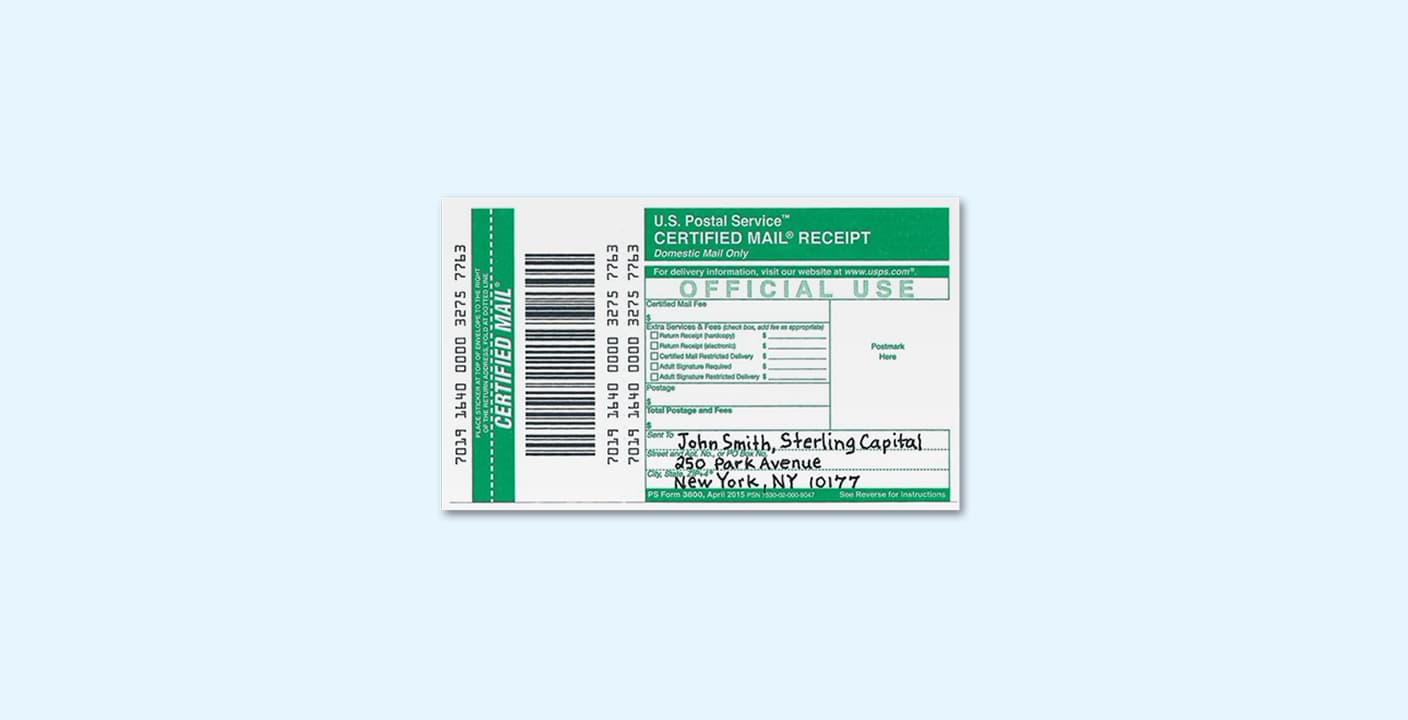
Certified Mail is a service provided by the mailing service that gives you a unique tracking number. When you use this service you get a mailing receipt at the time of mailing. This is your proof that you actually handed the envelope to the post office.
When the letter reaches its destination the mail carrier requires a signature to deliver it. If no one is home they leave a notice and the recipient has to go to the post office to pick it up.
What you get with Certified Mail:
- Proof of mailing (Form 3800)
- Online tracking showing delivery or attempted delivery
- A record kept by USPS for two years
What you do NOT get:
- You do not automatically see the signature.
- You do not get a copy of the signature mailed back to you.
What is a Return Receipt?
Return Receipt is an optional add-on. You cannot buy it by itself. You must attach it to another service like the Certified Mail.
Think of Return Receipt as the “I told you so” proof. It provides evidence of delivery including who received the mail and the date of delivery.
What you get with Return Receipt:
- A physical green card (Form 3811) mailed back to you with the recipient's actual signature.
- OR an electronic PDF copy of the signature emailed to you.
Electronic vs. Hard Copy Return Receipt
If you decide you need that signature you have a choice to make. The USPS offers two versions of the Return Receipt and the price difference is significant.
1. Hard Copy (The Green Card)
This is the classic method. You fill out a green postcard (PS Form 3811) and stick it to the back of your envelope. When the mail carrier delivers the letter they rip this card off, get the recipient to sign it, and mail it back to you.
- Pros: You get a physical hard copy for your files. Courts often prefer original physical evidence.
- Cons: It costs more. It can get lost in the mail on the way back to you.
2. Electronic Return Receipt
This is the modern version. You do not stick a green card on the envelope. Instead the signature is captured digitally by the mail carrier's scanner. You can then go to the USPS website, enter your tracking number, and download a PDF of the signature.
- Pros: It is significantly cheaper (saves you over a dollar usually). You get the file instantly once it is available. It cannot get lost in the mail.
- Cons: Some very old-school legal processes still demand physical green cards.
According to the USPS FAQ on Return Receipts, the electronic option is not available for items sent to APO/FPO addresses or US territories, so keep that in mind if you are mailing overseas military mail.
Visual Breakdown: Which Service Do You Need?
It helps to see the features side by side.
| Feature | Certified Mail Only | Certified Mail + Return Receipt |
|---|---|---|
| Tracking Number | Yes | Yes |
| Proof of Mailing | Yes | Yes |
| Signature Required | Yes | Yes |
| Copy of Signature | No | Yes (Digital or Physical) |
| Price | Base Fee | Base Fee + Extra Fee |
| Best For | General important docs | Legal notices, IRS, Debt collection |
How to Send Certified Mail with Return Receipt
The process is more manual than regular mail. You cannot just drop this in a mailbox if you want the official postmarked receipt.
- Go to the Post Office: You need to go in person to get the round-stamp on your receipt.
- Fill out Form 3800: This is the white and green sticker bar code. Peel the sticker off and put it to the left of the address on your envelope.
- Fill out Form 3811 (Optional): If you want the Return Receipt, fill out the green postcard. Attach it to the back of the envelope. Make sure you put your own address on the reverse side so it comes back to you.
- Pay the Clerk: Hand everything to the clerk. They will weigh it and charge you for First Class postage plus the Certified fee plus the Return Receipt fee.
- Save the Receipt: The clerk will give you a bottom portion of Form 3800 with a round stamp on it. Do not lose this. This is your primary proof of mailing.
For a deep dive into the specific pricing, you can check the current rates on the Certified Mail Labels site, as postage rates tend to climb annually.
Summary
You use Certified Mail when you need a legal tracking number to prove you sent a letter. It is the baseline for important mail.
You add Return Receipt when you need undeniable proof of exactly who signed for that letter and when. If you are worried the recipient will lie, or if a lot of money is on the line, pay the extra couple of dollars for the Return Receipt.
Most of the time the Electronic Return Receipt is sufficient and cheaper than the physical green card. Just make sure you save your tracking number in a safe place immediately after leaving the post office.
Frequently Asked Questions
Does Certified Mail require a signature?
Yes. The mail carrier cannot just drop the letter in the mailbox. Someone at the address must sign for it. If no one is there, a notice is left.
How much does it cost?
The price changes with USPS rate hikes, but generally you pay for regular postage (around $0.68) plus the Certified Mail fee (around $4.40) plus the Return Receipt fee (around $3.65 for hard copy, $2.32 for electronic).
Can I track Certified Mail?
Yes. The number on Form 3800 (the green and white sticker) is a tracking number. You can enter it on Google or the USPS website to see the status.
Is Return Receipt worth it?
If you are involved in a legal dispute or a serious financial transaction, yes. The signature is the gold standard of proof. For routine business mail, standard Certified Mail is usually enough.
Related Articles
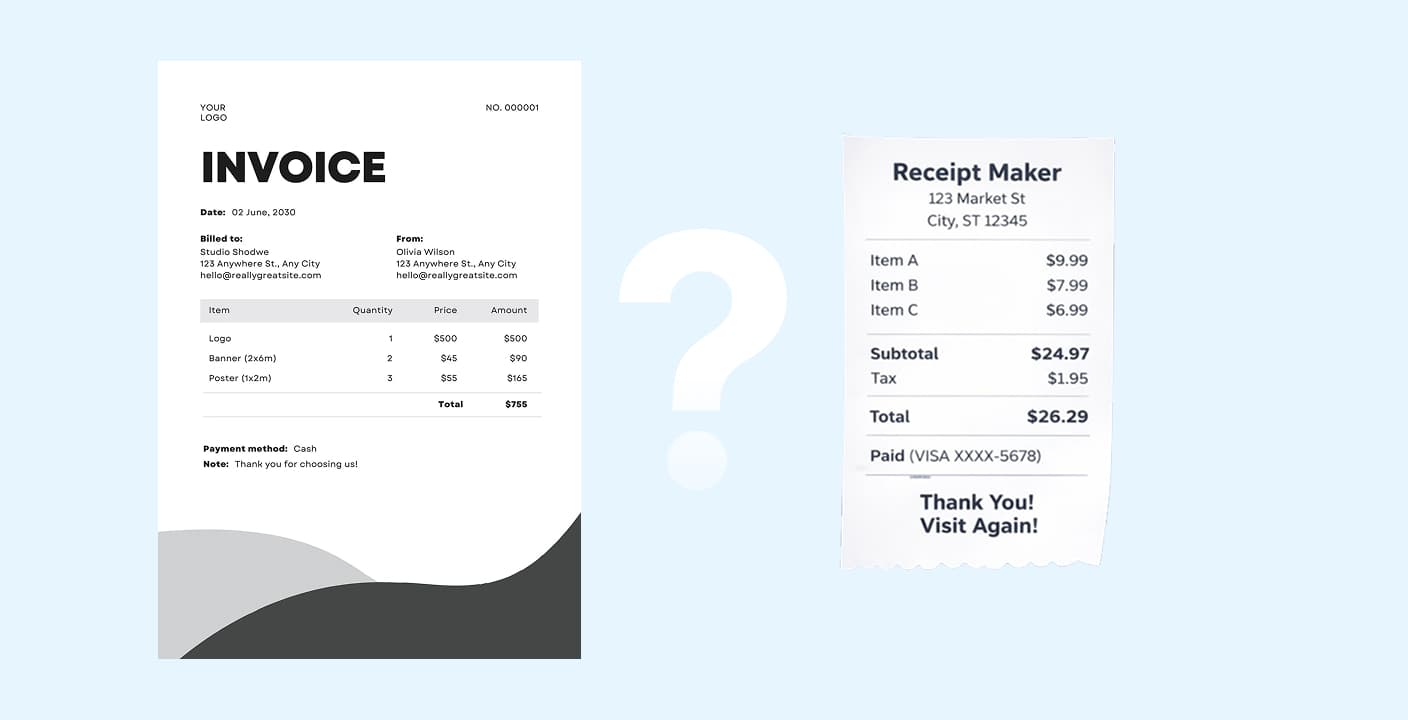
Invoice vs Receipt: What's the Difference?
An invoice requests payment before money changes hands. A receipt confirms payment after it's complete. Mixing them up can delay payments and cause tax audit problems.
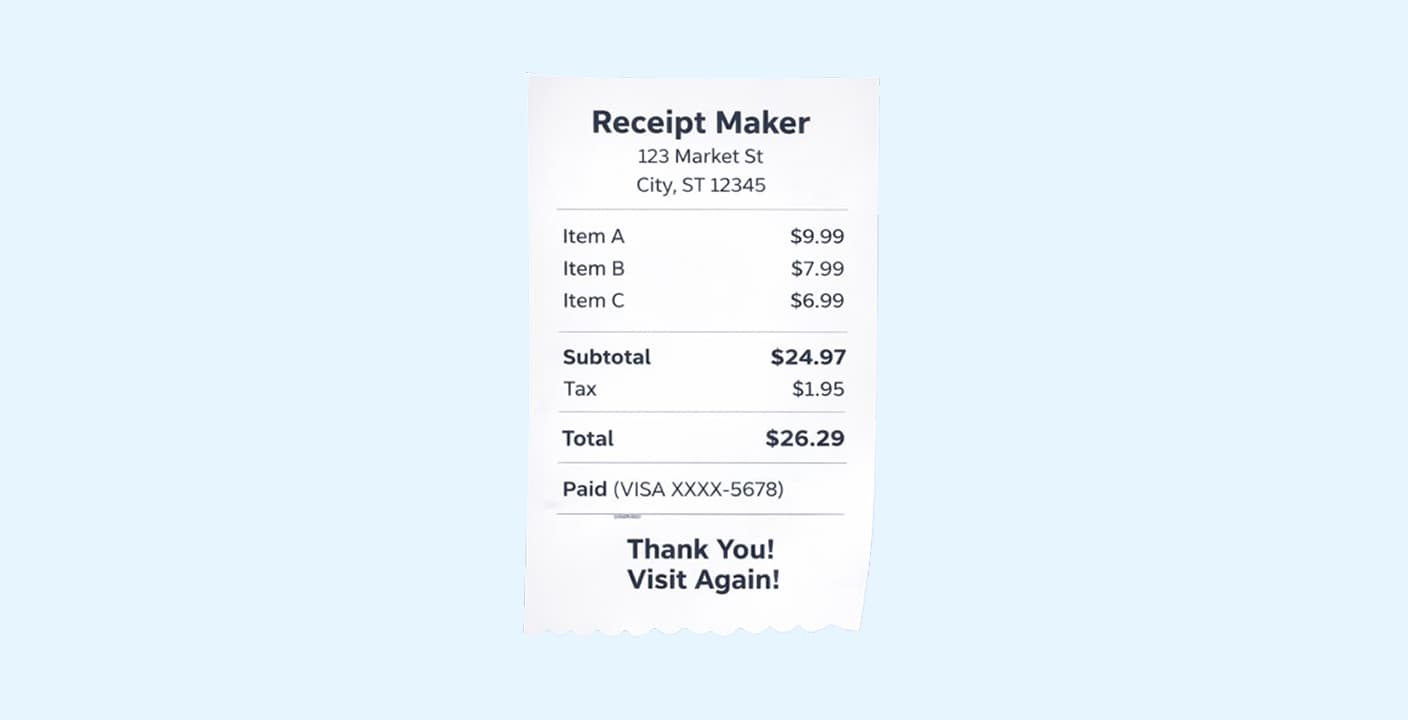
What Is an Itemized Receipt
An itemized receipt lists every product or service in a transaction with individual prices. Learn why it's essential for tax deductions, reimbursements, and audits.