
Can Receipt Paper Be Recycled?

Reggie Jacobs
Founder of Receipt Maker & Document Management Expert
Most receipts can't be recycled - and putting them in your recycling bin might contaminate the entire batch. Here's why.

Quick Answer
If the receipt is shiny, smooth, and turns black when you scratch it, it is thermal paper. This cannot be recycled.
If the receipt feels like regular dry paper and has actual ink printed on it, it is likely bond paper. This can be recycled.
We have all been there. You grab a coffee, stuff the receipt in your pocket and find it three days later. It is just a tiny scrap of paper. Naturally, you toss it in the recycling bin and feel like you did your part for the planet.
But here is the hard truth.
You likely just contaminated that entire batch of recycling.
It sounds counterintuitive. Paper is paper, right? Not in this case. Most modern receipts are not actually made of paper in the traditional sense. They are complex chemical sheets that can introduce toxins into the recycling stream.
This guide breaks down exactly why most receipts belong in the trash, how to tell the difference between the good and the bad ones, and what you should do instead. For digital records that never fade, use an online receipt generator to create and save receipts.
The Short Answer: Can You Recycle Receipts?
It depends, but the answer is usually no.
If the receipt is shiny, smooth, and turns black when you scratch it, it is thermal paper. This cannot be recycled.
If the receipt feels like regular dry paper and has actual ink printed on it, it is likely bond paper. This can be recycled.
The problem is that thermal paper dominates the market. From grocery stores to gas stations, almost every modern Point of Sale (POS) system uses thermal printers because they do not require ink cartridges. That means the vast majority of receipts you touch are not recyclable.
The Problem With Thermal Paper
To understand why these receipts are an issue, we have to look at how they work. Thermal printers do not spray ink onto the paper. Instead, the paper itself is coated with a chemical layer. When the printer head heats up, it activates that layer and turns the paper black to form letters and numbers.
That chemical layer is the villain here.
It typically contains Bisphenol A (BPA) or Bisphenol S (BPS).
You have probably heard of BPA. It is an industrial chemical used to make certain plastics and resins. It is often flagged as an endocrine disruptor, which means it can mess with your hormones. Because of health concerns, many manufacturers switched to BPS. Unfortunately, studies suggest BPS might have similar negative effects.
Why You Can’t Just "Recycle It Anyway"
You might think that one tiny receipt won't hurt a massive pile of cardboard and office paper.
That is incorrect.
When you recycle paper, it gets pulped into a slurry, washed, and turned into new products. If BPA or BPS receipts get into that mix, the chemicals do not just disappear. They end up in the new products.
We are talking about recycled toilet paper, paper towels, and facial tissues potentially containing traces of BPA. Because these products come into contact with sensitive areas of the body, the contamination is a genuine concern for recyclers.
Note: Recycling facilities urge you to keep thermal paper out of the bin to protect the quality of the recycled pulp supply.
How to Test Your Receipt (The Scratch Test)
You do not need a lab to figure this out. You can identify thermal paper in about two seconds.
- Place the receipt on a hard surface.
- Press your fingernail firmly against the printed side.
- Scratch quickly.
The Result:
- If a dark grey or black line appears where you scratched, it is thermal paper. Throw it in the trash.
- If the paper remains white and only shows an indentation, it is likely bond paper. You can recycle it.
Here is a quick breakdown to help you visualize the difference:
| Feature | Thermal Paper (The Bad) | Bond Paper (The Good) |
|---|---|---|
| Texture | Shiny, smooth, slightly slick | Dry, rougher, feels like notebook paper |
| Printing Method | Heat (no ink) | Ink ribbons or cartridges |
| Scratch Test | Turns black | No color change |
| Common Use | Gas pumps, grocery stores, fast food | ATMs (sometimes), older cash registers |
| Disposal | Trash | Recycle |
Can You Compost Receipts?
This is a common follow-up question. If it is paper, surely it will break down in the garden?
While the paper fibers will decompose, the chemicals (BPA/BPS) will leach into your soil. If you use that compost to grow vegetables or herbs, you are introducing those plasticizers right into your food supply.
Do not put thermal receipts in your compost bin.
Related Articles
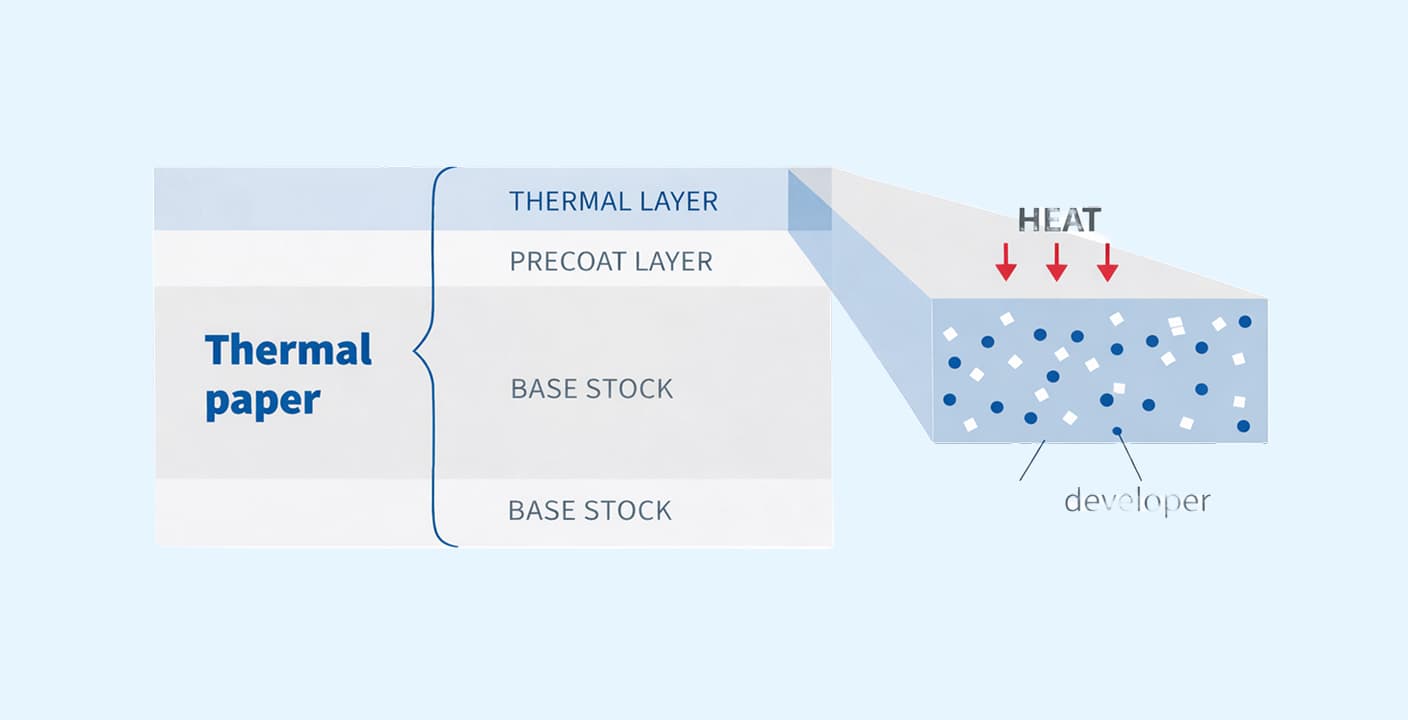
How Does Receipt Paper Work?
Thermal receipt paper doesn't use ink - it relies on a heat-activated chemical reaction. Understanding this process reveals why receipts fade and what health concerns you should know about.
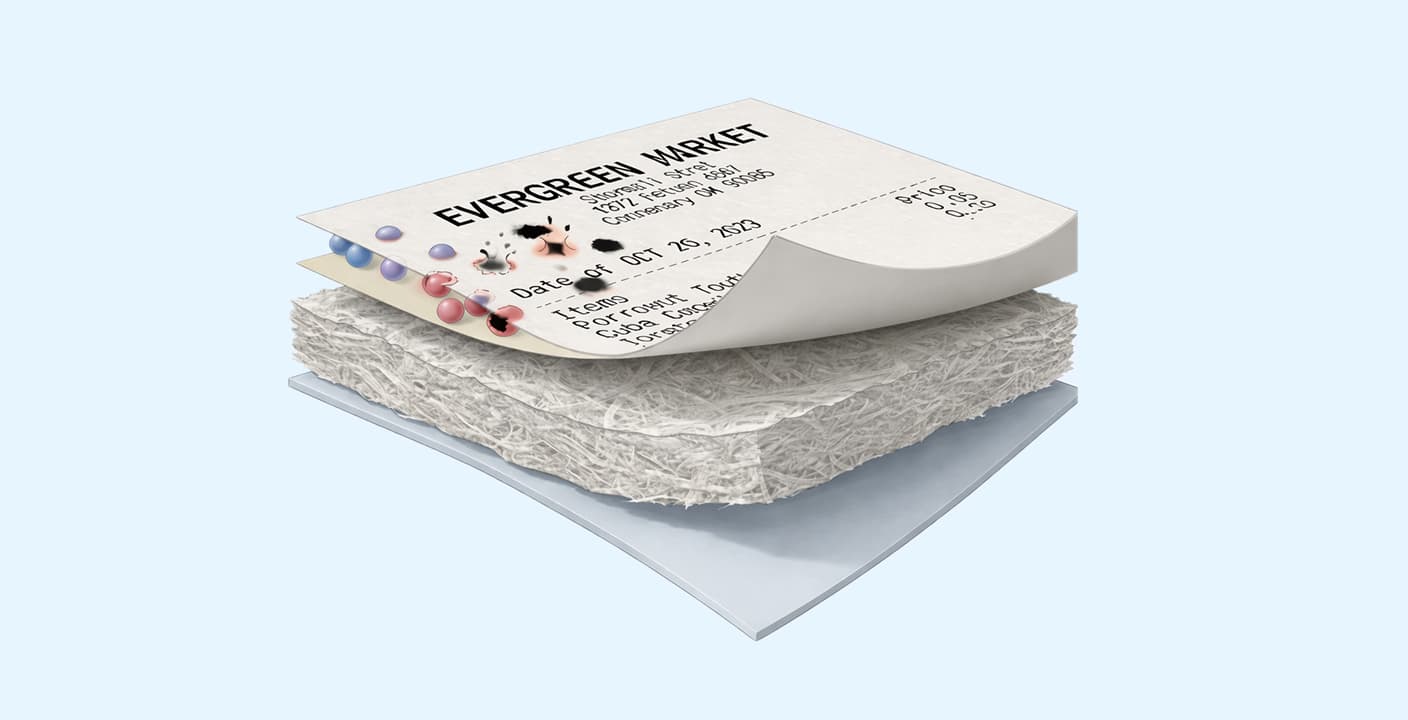
What Is Receipt Paper Made Of? (And Why It Fades)
Understanding what's in receipt paper helps you handle them safely.