
The 5,000-Year History of Receipts (And Why They Still Matter)

Reggie Jacobs
Founder of Receipt Maker & Document Management Expert
The first recorded human name in history wasn't a king or warrior - it was an accountant signing a receipt. This is the surprising story of how receipts shaped civilization.
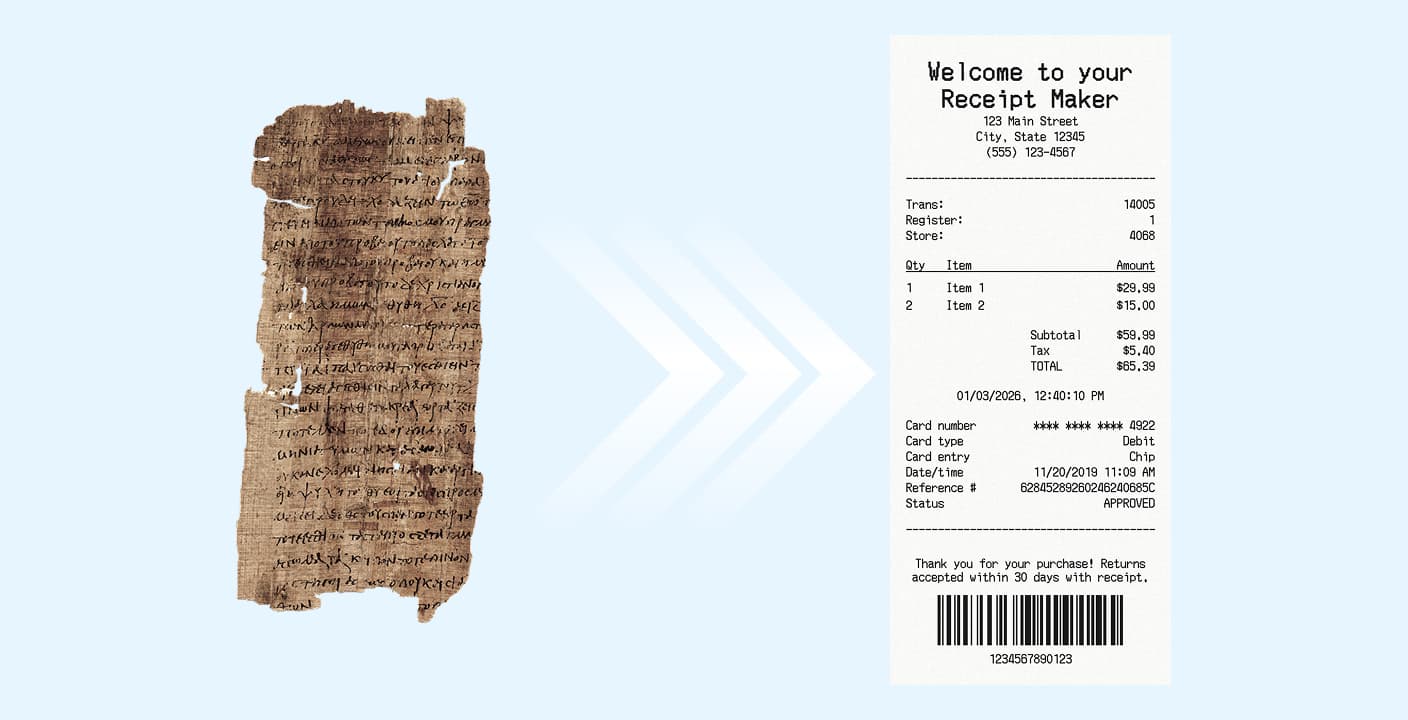
Timeline Highlights
Key moments in receipt history:
- 3400-3000 BC: Kushim, the first named human, signs a clay tablet receipt for 29,086 measures of barley in ancient Sumer
- Writing was invented to track debt - not to tell stories, but to create permanent proof of transactions
- 1700s: Paper receipts become standard as commerce scales beyond local villages
- 1888: The first cash register is invented, printing standardized receipts automatically
- 1979: Thermal printing revolutionizes receipt technology - eliminating ink and making transactions faster
- 2026: Digital receipts and blockchain create immutable, searchable transaction records
The takeaway: Receipts aren't just scraps of paper - they're the foundation of trust in commerce.
Here is a fact that might surprise you: The first recorded name of a human being in history was not a king, a warrior, or a poet.
It was an accountant.
His name was Kushim, and he lived in ancient Sumer (modern-day Iraq) around 3400–3000 BC. We know his name because he signed it on a clay tablet that read: "29,086 measures barley 37 months Kushim."
That clay tablet wasn't a poem. It was a receipt.
We often think of receipts as the annoying scraps of paper that clutter our wallets or the spammy emails we delete without opening. But historically, receipts are the bedrock of civilization. Today you can use a free receipt generator to create professional receipts in seconds. They are the reason writing was invented. They are the tools that allowed trust to scale beyond a small village.
In this post, we’re going to look at the evolution of the receipt, from dried mud to digital data, and what it tells us about the future of business.
The Ancient World: Clay, Pottery, and Proof
Writing wasn't invented to tell stories; it was invented to track debt.
Before we had money as we know it, we had trade. If you gave someone 29,000 measures of barley, you needed proof they received it. You couldn't just trust their memory. You needed an immutable record.
The Clay Tablet (3000 BC)
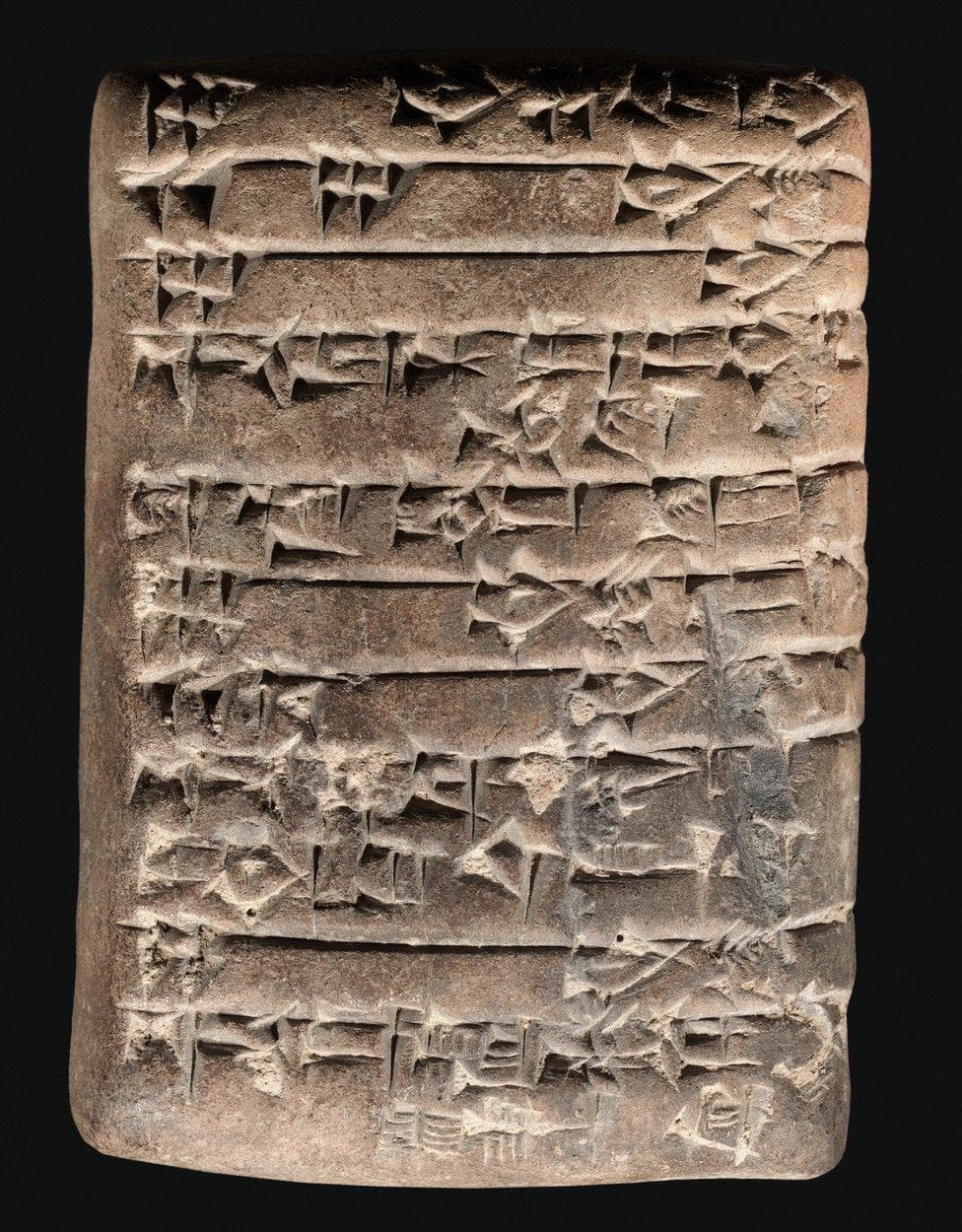
The Sumerians developed cuneiform, the earliest known writing system, largely to create receipts.
- The Mechanism: Scribes would press a reed stylus into wet clay to record the transaction (barley, sheep, oil).
- The Security: Once baked in the sun, the clay became permanent. You couldn't "cook the books" without breaking the tablet.
- The Legacy: The Kushim Tablet is the most famous example. It answers the question "What is the oldest receipt?" by dating back over 5,000 years.
Deep Dive: For a visual look at how this system started human history, this short documentary covers the origins of writing in Mesopotamia:
The Samaria Ostraca (8th Century BC)
Fast forward to ancient Israel. People used ostraca - broken shards of pottery - to write tax receipts. These shards recorded the delivery of luxury goods like aged wine and cosmetic oil to the capital, Samaria. They serve as some of the earliest examples of government tax compliance (and likely, tax audits).
Key Takeaway: The fundamental purpose of a receipt has never changed in 5,000 years. It is about trust verification. It transforms a "he said/she said" situation into objective reality.
2. The Paper Revolution & The Printing Press
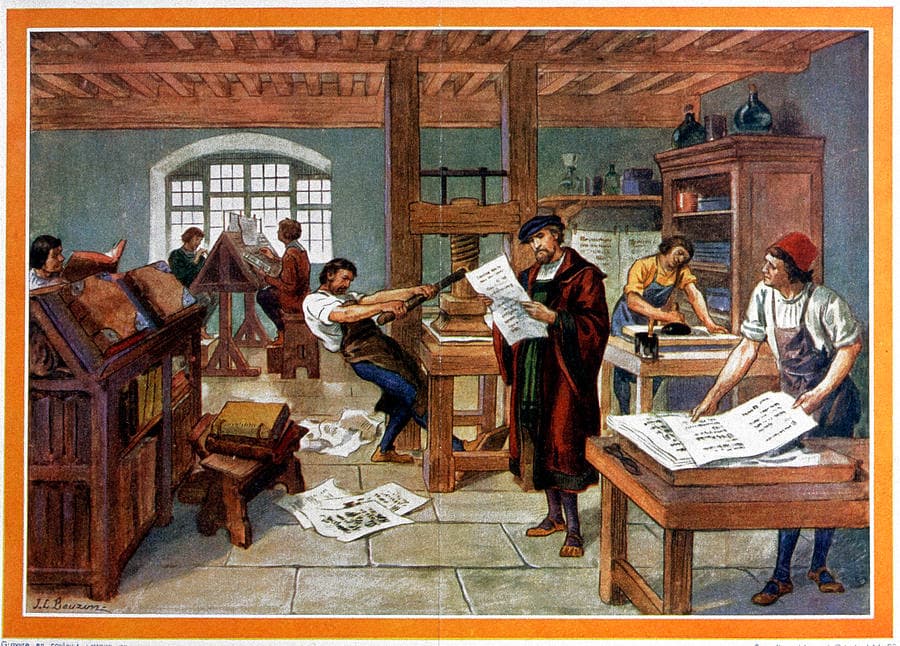
For centuries, receipts were handwritten on papyrus or parchment. This was expensive and slow.
The game changed in 1436 AD with Gutenberg’s printing press. While we usually credit the printing press with spreading literature, it also revolutionized commerce. Merchants could finally use pre-printed forms.
- Instead of writing "I acknowledge receipt of..." by hand every time, they simply filled in the blanks (Date, Amount, Payer) on a printed slip.
- This was the ancestor of the modern "fill-in-the-box" user interface.
By the 18th century, receipts became standardized documents used by banks and merchants to track gold deposits - eventually evolving into the paper banknotes we use today.
3. The "Incorruptible Cashier" (1879)
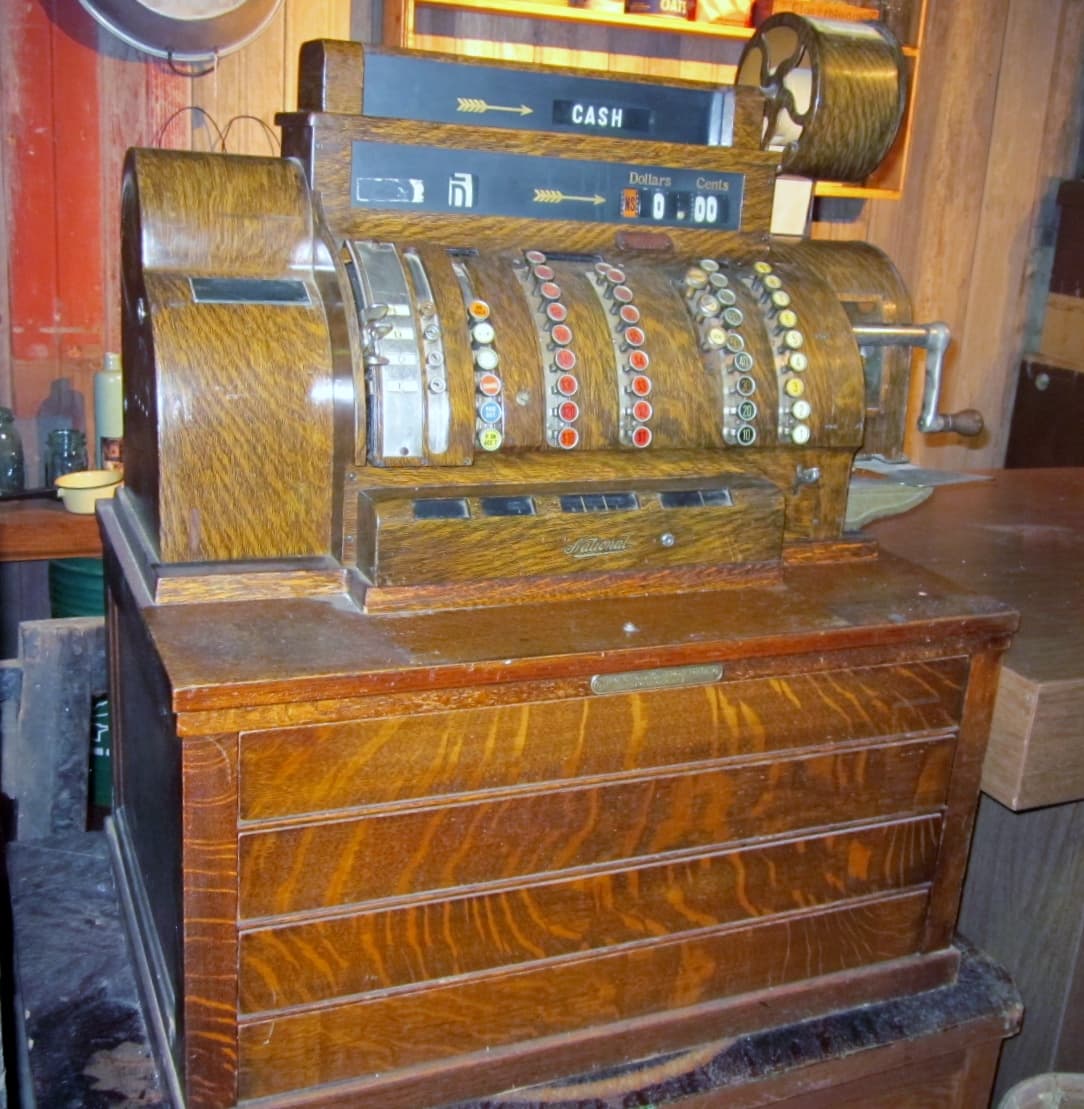
Here is a common misconception: The cash register was invented to speed up checkout. False. It was invented to stop employees from stealing.
In the late 1870s, a saloon owner in Dayton, Ohio named James Ritty had a problem. His saloon was popular, but he was losing money. He suspected his bartenders were pocketing cash.
While on a steamboat trip to Europe, Ritty observed the mechanism that counted the ship's propeller rotations. He wondered: Could I build a machine that counts cash the same way?
The Invention
In 1879, Ritty patented "Ritty’s Incorruptible Cashier."
- The Bell: The machine rang a loud bell every time the drawer opened. This wasn't for fun - it was an alert system. If the manager heard the bell but didn't see a customer, he knew something was wrong.
- The Receipt: Later versions of the machine (popularized by NCR - National Cash Register Company) punched holes in a paper roll, creating the first automated physical record of sales.
Watch the History: To see how Ritty's invention changed retail forever, check out this breakdown of the cash register's evolution:
This moment marked the shift from receipts being optional handwritten notes to being an automated part of every transaction.
4. The Thermal Era (1960s – Present)
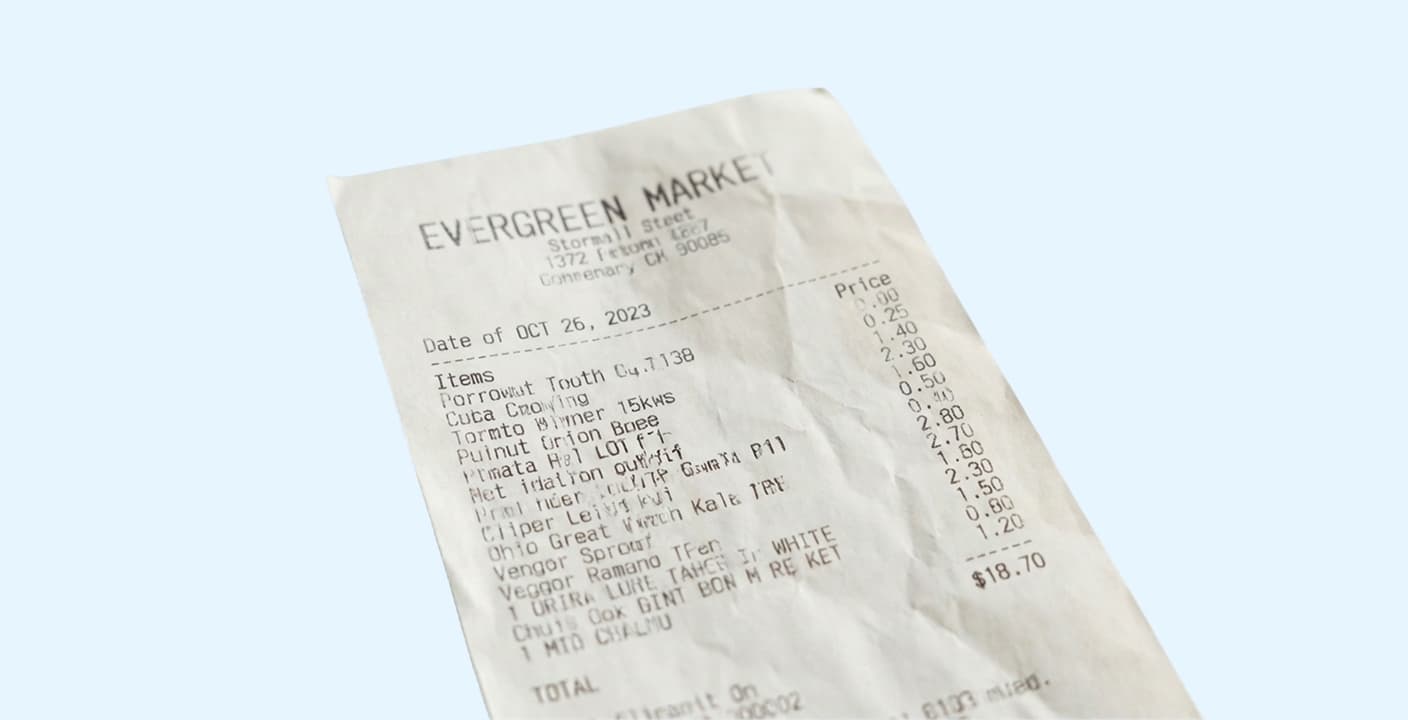
If you have ever left a receipt on your car dashboard on a hot day, you know what happens: it turns black and becomes unreadable.
Do receipts disappear over time? Yes, and here is why.
Modern receipts use thermal paper, introduced in the 1960s and 70s.
- How it works: The paper is coated with chemicals (originally BPA, now often BPS) that change color when exposed to heat. The printer has no ink; it essentially "burns" the text onto the paper.
- The Pros: It is fast, quiet, and requires no ink cartridges.
- The Cons: It is fragile. Thermal receipts fade over time, making them terrible for long-term record keeping (which is ironic, considering the IRS requires you to keep them for years).
5. The Digital Shift: From Paper to Data
We are currently living through the biggest shift in receipt history since the clay tablet.
Phase 1: The PDF (2000s) With the rise of eCommerce, receipts moved to email. However, these were just digital images of paper. They were "dumb" documents. You couldn't easily analyze your spending without manually typing the numbers into Excel.
Phase 2: The "Smart" Receipt (Today) Companies like Veryfi and Itemize use OCR (Optical Character Recognition) and AI to read receipts like a human does.
- They don't just see a picture; they extract line items, taxes, dates, and vendor names.
- This turns a receipt from a piece of trash into structured data that can automatically update accounting software, track inventory, and predict spending habits.
The Problem with Digital Receipts
Despite the tech, we aren't paperless yet.
- Spam Anxiety: Customers don't want to give their email address at a coffee shop because they fear marketing spam.
- Fragmentation: You have some receipts in Apple Wallet, some in Gmail, and some crumpled in your pocket.
Important Rules You Need to Know Now
Receipts aren't just history; they are current law. If you run a business, there are specific rules you need to follow.
The $75 Receipt Rule
One of the most common questions from business owners is: Do I need to keep every single coffee receipt? According to the IRS (in the US), the documentary evidence rule - often called the $75 receipt rule - states that you generally do not need a receipt for business expenses under $75.
- The Catch: You still need to record the expense in your books (date, time, amount, purpose). You just don't need the physical slip of paper if audited.
- The Exception: Lodging (hotels) always requires a receipt, regardless of the amount.
How to Find Old Receipts
If you need to find an old receipt for a warranty or audit, the "shoebox method" usually fails.
- Is there a way to find old receipts? If you paid by card, start with your bank statement. It won't give you the line items, but it gives you the date and vendor. You can then contact the vendor’s customer service with that transaction ID. Many modern POS systems (like Square or Toast) can retrieve a receipt via the credit card number used.
Summary & Key Takeaways
The history of receipts is really a history of human trust. As our economies grew larger and more complex, we needed better ways to verify that value was exchanged.
The Timeline at a Glance:
- 3000 BC: Clay Tablets (The "Kushim" Receipt) prove the invention of writing was for accounting.
- 1436 AD: Printing Press enables pre-filled forms.
- 1879 AD: James Ritty invents the cash register to stop employee theft.
- 1970s: Thermal Paper makes printing fast but volatile.
- 2000s: Digitalization goes paperless.
Next Steps for You: If you are a business owner, stop treating receipts as "compliance trash." They are data. Look into tools that automate receipt capture (like automated expense management software) so you stop losing that 5,000-year-old proof of purchase.
FAQ: History of Receipts
Q: Who invented the receipt? A: While we don't know the specific person, the Sumerians of ancient Mesopotamia (modern Iraq) are credited with creating the first receipt system using cuneiform on clay tablets around 3000 BC. The first named person on a receipt is "Kushim."
Q: Why is a receipt called a receipt? A: The word comes from the Latin recipere (to receive). In Old Norman French, it was receite.
Q: Why is the P silent in receipts? A: This is due to a 16th-century trend where scholars tried to make English words look more like their Latin roots. They inserted the "p" to mimic the Latin recepta, even though the French word receite (which English borrowed from) didn't have one. The pronunciation never changed, but the spelling did.
Q: Why do receipts fade? A: Most modern receipts are printed on thermal paper. They don't use ink; they use heat to darken chemicals on the paper. Over time, exposure to light, heat, or friction causes the chemicals to degrade or the whole paper to darken, making the text disappear.
Q: When was the cash register invented? A: The first mechanical cash register was invented in 1879 by James Ritty. He called it "Ritty's Incorruptible Cashier."
Q: Are paper receipts recyclable? A: Generally, no. Thermal receipts are coated with chemicals (BPA or BPS) that can contaminate the recycling stream. They should usually be thrown in the trash, not the recycling bin.
Related Articles
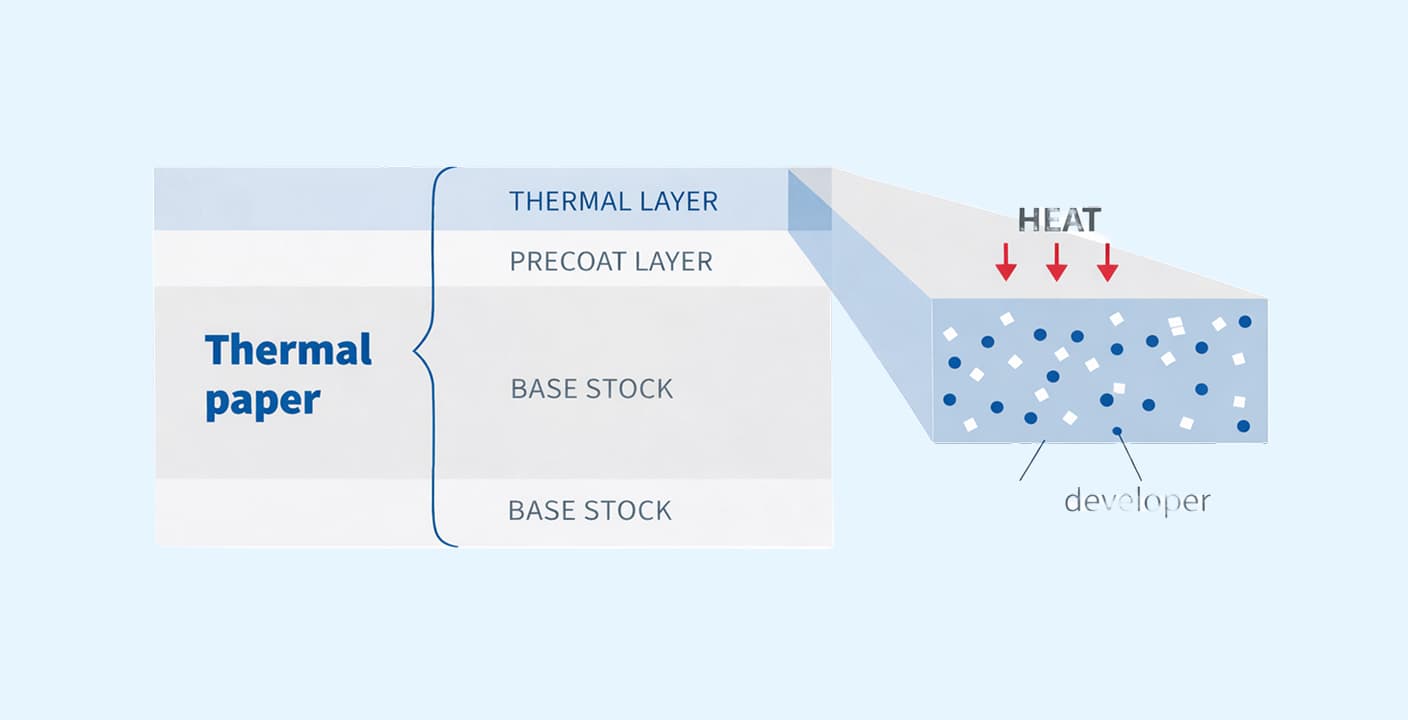
How Does Receipt Paper Work?
Thermal receipt paper doesn't use ink - it relies on a heat-activated chemical reaction. Understanding this process reveals why receipts fade and what health concerns you should know about.
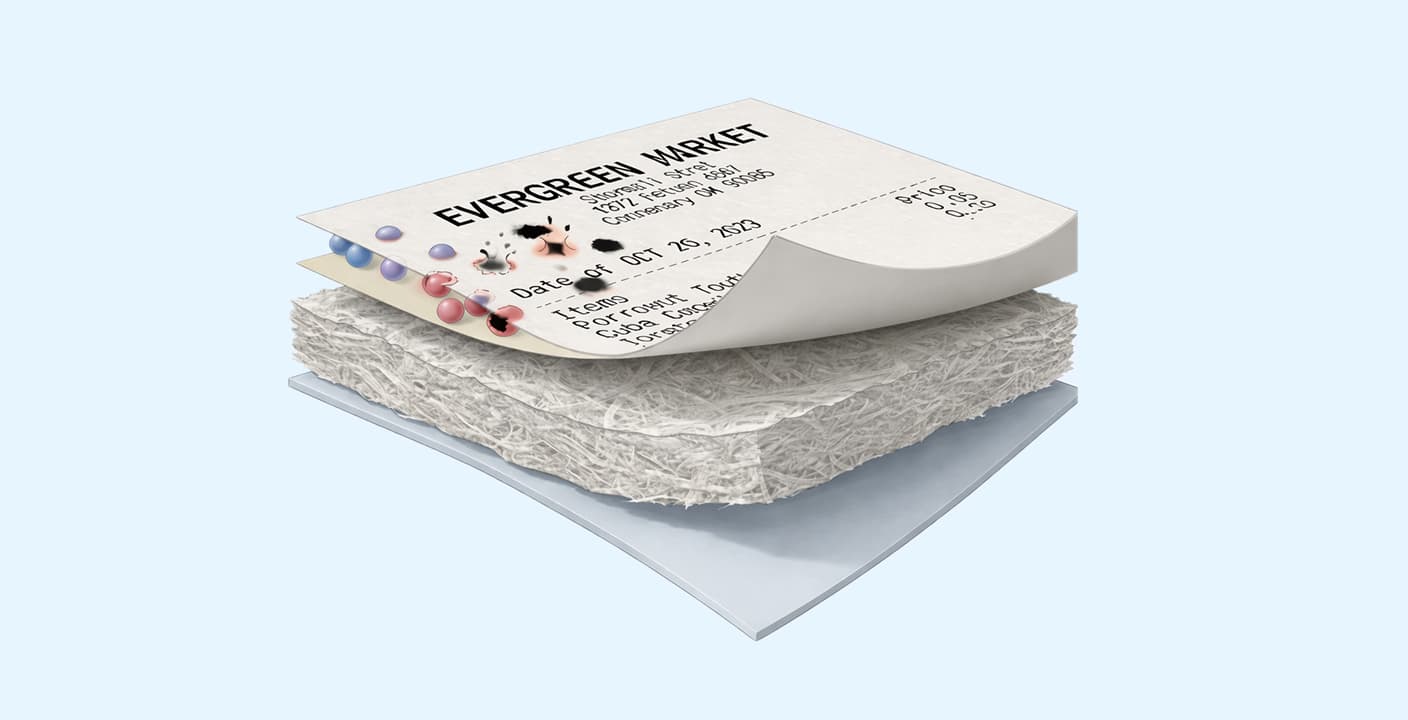
What Is Receipt Paper Made Of? (And Why It Fades)
Understanding what's in receipt paper helps you handle them safely.